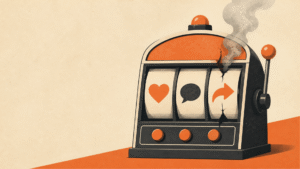

Every week brings a new format, sound or aesthetic that everyone on social seems to be copying. Brands feel the pressure to join in, and most arrive just as the wave breaks. There is a better way to look at it. Trends come and go, but the reasons they work do not.
Behind every trend sits a psychological trigger: variable reward, social proof, belonging, status, curiosity, strong emotion or parasocial trust. If you understand the trigger, you can build content that works long after the trend has faded. Here are seven trends shaping social media right now, and the triggers that fuel them.
1. Reels now come in seasons
Short vertical video is the default format, and it is turning serial. Think “part 1, part 2” storytimes, recurring creator formats and full vertical micro-dramas made for phones, now released by broadcasters too. People follow to find out what happens next.
Triggers it pulls: the curiosity gap (every episode ends on an open loop), variable reward (the endless swipe) and parasocial trust (recurring faces).
The catch: a series is a big investment. If the concept does not land, or the brand stops too early, the audience is left hanging.
2. The comment section is the new show
Many people open the comments before the video even ends. Top comments are jokes, running gags and inside references. Brands reply in character, and creators answer comments with whole new videos. The audience becomes the content.
Triggers it pulls: belonging (inside jokes mark the tribe), status (the top comment is a stage) and social proof (comment likes show what the crowd thinks). The catch: the same crowd can turn on you just as fast.
3. Vocal stims: sounds that spread on their own
Short words, noises and catchphrases that feel satisfying to say or hear get repeated, remixed and turned into audio trends. The term comes from stimming in neurodivergent communities and has gone mainstream as people share their favourite vocal stims.
Triggers it pulls: variable reward (a small sensory hit, again and again), belonging (shared sounds become group language) and emotion (playful and absurd).
The catch: brands that copy it carelessly come across as mocking or out of touch. And the sound rarely sticks to the brand.
4. Raw beats polished
Photo dumps, unfiltered selfies, clips shot on a phone and “deinfluencing” (creators telling you what not to buy) often beat glossy production. After years of curated feeds, imperfection reads as honesty.
Triggers it pulls: parasocial trust (it feels like a friend, not an ad), status (a reaction against over-polish) and social proof (real people, real results).
The catch: staged “raw” content gets spotted, and it backfires.
5. For many people, TikTok is the new Google
Younger users especially search TikTok and Instagram for restaurants, products, travel tips and how-tos. They want answers from real people, shown rather than told. That means content has to be findable: keywords in captions, in on-screen text and in what you say. Mapping social search shows how layered this gets. For a tourism destination, searches run from broad (“best time to visit”, “city A or city B?”) to very specific (“48 hours in the city”, cycling routes, the best local chocolate shops). Each layer is a content opportunity.
Triggers it pulls: the curiosity gap (answers in seconds), social proof (real people tried it) and parasocial trust (creators as guides).
The catch: search-bait and misinformation erode trust in the answers.
6. Entertainment and shopping are merging
TikTok Shop, live selling and product tags let people buy without leaving the app. “TikTok made me buy it” turned viral products into sell-outs. The creator is shop window, demo and review in one.
Triggers it pulls: parasocial trust (buying from someone you “know”), social proof (“sold out” signals) and variable reward (the thrill of a find).
The catch: when every video sells something, the feed turns into a cheap shopping channel.
7. Micro-aesthetics: identities that rise and fade in weeks
Clean girl, mob wife, quiet luxury, coastal grandma. Social media keeps producing “-core” aesthetics that bundle clothes, music, food and attitude into a ready-made identity. They spread fast and burn out just as fast.
Triggers it pulls: status (an instant identity to signal), belonging (a look that marks the group) and emotion (novelty and aspiration).
The catch: brands that chase every micro-trend arrive late and look try-hard.
Build your own world instead
The brands that win on social rarely chase trends. They build a world of their own and stick to it, so the audience recognises them before the logo appears. We look at a luxury fashion house that does this flawlessly in part 2 of this series.
Some brands go further and hide the product entirely. One eyewear brand runs ads with no visible pitch: an older woman writing in a café, a man behind the wheel of a vintage car, a line of text about comfort zones. You cannot guess what they sell, so you go and find out. At that point, the brand has already won.
The takeaway
Before you copy the next trend, ask which trigger it pulls and whether your brand can pull it credibly. Trends are the packaging. Triggers are what people actually respond to. In part 2, we look at each of the seven triggers in depth: why they work, and the exact point where they break.
Want to know which triggers your content is pulling, and which ones it is missing? Get in touch with the naYan team.